
It is common in our lives to be constantly reminded by our relatives, grandparents, and parents to sit up straight when we are young. And there are good reasons why they would nag at us about it.
While having a bad posture is a common problem among many Singaporeans, it does not mean that it should be overlooked or ignored. In fact, if not corrected, poor posture can lead to both psychological and physical issues, such as reduced motivation and poor digestion. It is vital to have and maintain a good posture.
Benefits of having a right sitting posture
Here are a couple of winning benefits of having the right sitting posture:
- Energy boost
- Increased concentration
- Relieved back stress
- Reduced back pain and aches
- Fewer headaches
- Optimised digestion
- Self-confidence boost
- Easier breathing
At this point, if you are thoroughly convinced of the benefits of having or maintaining the right sitting posture, the next big question is how you can begin improving it. Here are three ways to embark on a pain-free and healthy posture journey.
1. Maintaining a healthy weight
It might not sound logical, but maintaining a healthy weight is one of the ways to achieve a healthy sitting posture. Often, individuals with excessive weight cause their bones and muscles to bear more load than they should, affecting the flexibility and stability of their spine, and, ultimately, posture.
Hence, cutting down on one’s weight through ensuring a healthy and active lifestyle, such as exercising regularly and consuming more vegetables and fruits, is vital.
2. Strengthening your postural muscles
Postural muscles refer to the muscle sets designed to mobilise and stabilise your body, such as your adductors, piriformis, hamstrings, and upper trapezius. Your deep core stabilising muscles, such as your diaphragm, pelvic floor, lower back, and transverse abdominis, are also integral aspects of your postural muscles.
Strengthening your postural muscles through exercise can significantly improve your sitting posture. The types of exercise to address poor sitting posture depend on the specific issues one develops. For example, if an individual develops rounded shoulders and a forward neck posture, the recommended exercises may include seated rotation, cat-cow positions, and chin tucks.
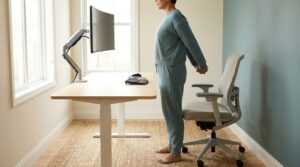
3. Investing in Ergonomic furniture
Maintaining the right posture throughout the day can be challenging. It might feel uncomfortable and unnatural initially. One way to help you ease this transitional process is by investing in the right ergonomic furniture, such as a chair.
Here are some factors to consider when choosing one:
- Adjustable seat height: Everyone has varying heights and size. Hence, you need to get a chair that offers adjustable seat height so that your feet are completely flat on the floor with your knees form a right angle.
- Seat depth and width: For optimal comfort, the seat should be wide enough to accommodate at least one inch on both sides of your hips. Additionally, the seat depth should be adjustable to allow you to sit against the backrest with about four fingers of space between your knees and the seat.
- Lumbar support: Poorly designed chairs often lead to lower back pain due to a lack of lumbar support. When choosing an ergonomic chair, ensure that it provides adequate lumbar support promote dynamic sitting rather than just a static posture. Hence, your backrest should be reclinable.
- Armrest: The armrest should be comfortable, adjustable, and broad enough such that your forearms and elbows are able to rest lightly on them perpendicularly.
Conclusion
If investing in ergonomic furniture does not help improve your sitting posture and instead leads to worsening pains and aches, chiropractic care is the ultimate way to improve your postural and spinal health.
In some cases, chronic pains and aches may indicate a more severe postural disorder known as scoliosis, which is a form of misalignment of spinal pattern. Chiropractic care addresses various musculoskeletal discomforts, including lower back pain, knee pain, and frozen shoulder, effectively.
Here at Healing Hands Chiropractic, we are committed to providing the highest level of care through personalised care and techniques, from lower back pain treatment to knee pain treatment. Visit us to find out how we can help you achieve the right sitting posture, no matter your age!