Posture correction is a gradual process of improving how your head, shoulders, spine, pelvis, and lower body are positioned during daily activities. Poor posture may develop through habits such as prolonged screen use, unsupported sitting, or limited movement. It can also be influenced by muscle strength, joint mobility, previous injuries, and individual body structure.
Improving posture does not require one universal solution. A suitable plan may include posture correction exercises, workplace adjustments, movement breaks, and professional assessment where appropriate. Chiropractic care may be considered as part of an individual plan, but results vary depending on the underlying cause, overall health, consistency, and response to care.
What is posture correction?
Posture correction involves identifying habits or physical factors that may contribute to inefficient positioning and then working on practical changes. These changes may include improving upper-back mobility, strengthening supporting muscles, adjusting a workstation, and learning to move with better control.
A posture corrector, such as a brace or wearable support, may remind someone to avoid slouching. However, it should not be presented as a permanent solution or as a replacement for assessment and active exercise. Its usefulness depends on the individual, the product, and how it is used.
Posture correction is therefore different from simply trying to “sit up straight” all day. The goal is to develop comfortable, sustainable movement habits rather than maintain a rigid position.
Can chiropractic care help with posture?
A chiropractor may assess movement, joint mobility, muscle balance, work habits, and symptoms before recommending care. Depending on the assessment, a plan may include manual techniques, exercises, soft-tissue work, posture education, or ergonomic suggestions.
Chiropractic adjustments are one possible part of a broader plan. The appropriate approach depends on the person’s presentation and should be explained by a qualified practitioner. Do not treat online information as a diagnosis or assume that one treatment is suitable for every posture concern.
For more background on treatment methods, see how chiropractic adjustments work and what to expect. You can also read about spinal alignment and health.
How to fix forward head posture
Forward head posture describes a position in which the head sits farther forward relative to the trunk. It is often discussed in relation to prolonged computer or smartphone use, although individual causes can differ.
If you are wondering how to fix forward head posture, begin with manageable changes:
- Adjust the screen so you are not repeatedly looking down.
- Take regular breaks from sitting and device use.
- Practise gentle neck and upper-back movements.
- Strengthen muscles that support the neck, shoulders, and upper back.
- Avoid forcing the head into a rigid position.
- Seek an assessment if discomfort persists or worsens.
For related screen-use habits, see tech neck from mobile device use.
Exercises should be comfortable and controlled. Stop if an exercise causes sharp pain, dizziness, unusual weakness, or worsening symptoms, and seek appropriate medical advice.
Posture correction exercises
Posture correction exercises should match a person’s abilities and goals. The following movements may be useful for some people, but they are not appropriate for every condition.
Chin tucks
A chin tuck involves gently drawing the chin backward without looking down. The movement should be small and controlled. It may help someone practise a more neutral head position, but it should not be forced or held through pain.
Wall angels
Stand with your back near a wall and move your arms slowly upward and downward while maintaining a comfortable position. The goal is controlled shoulder and upper-back movement, not forcing the wrists or elbows to remain against the wall.
Glute bridges
Lying on your back with your knees bent, lift your hips in a controlled manner and lower them slowly. This exercise is commonly used to practise hip and trunk control.
Bird-dog
From an all-fours position, extend one arm and the opposite leg while trying to keep the trunk steady. Use a smaller range of movement if maintaining balance is difficult.
For additional exercise ideas, see how daily stretching can help.
Upper-back posture exercises and workplace habits
Upper-back posture exercises often focus on mobility, shoulder-blade control, and strengthening. Examples may include gentle thoracic-extension movements and exercises that encourage controlled scapular movement.
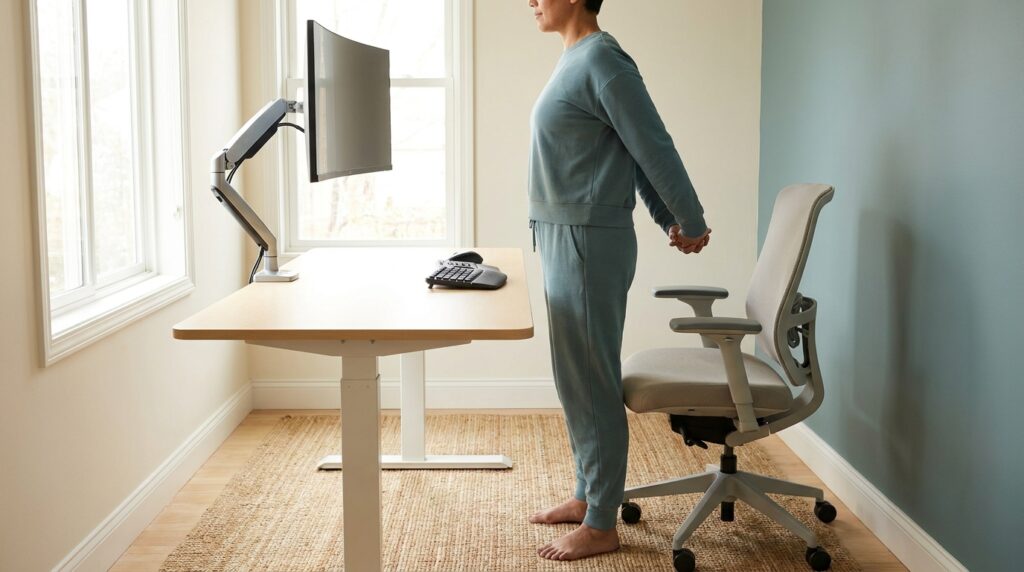
Workstation habits also matter. Consider these adjustments:
- Position the monitor so you do not need to repeatedly bend your neck.
- Keep your feet supported.
- Use a chair that allows your back to rest comfortably.
- Keep the keyboard and mouse within easy reach.
- Change position regularly instead of staying still for long periods.
- Stand, walk, or move briefly throughout the day.
Read more about workplace ergonomics for practical desk adjustments.
Swayback posture and other concerns
Swayback posture refers to a standing pattern involving changes in the position of the pelvis and trunk. It should not be diagnosed from a photograph or online description alone. Different people may use the same term to describe different movement patterns.
The source article also discusses “tech neck,” forward head posture, hyperkyphosis, and a Dowager’s Hump. These terms should be used carefully and, where necessary, defined by a qualified healthcare professional. A visible posture difference does not automatically establish the cause of pain or indicate that a person needs a specific treatment.
What happens during an assessment?
An assessment may include a discussion of health history, movement tests, strength testing, and review of daily activities. Digital photographs or imaging may be considered in some cases, depending on symptoms, history, examination findings, and clinical judgement.
Imaging is not automatically required for every posture concern. Ask the practitioner why a particular assessment or test is being recommended and how the result would affect your care plan.
Poor posture treatment: what should you expect?
Poor posture treatment should be individualised. It may involve education, exercises, ergonomic changes, manual care, or referral to another healthcare professional. The appropriate approach depends on the person’s symptoms and assessment findings.
Be cautious of promises that posture correction will permanently resolve pain, prevent all future problems, or produce a predictable result within a fixed number of visits. Progress may be gradual, and the most useful plan is one that can be performed consistently and adjusted when necessary.
If you are considering chiropractic care, discuss your health history, current symptoms, medications, previous injuries, and relevant imaging with the practitioner. Ask what the proposed treatment is intended to do, what alternatives are available, and how progress will be assessed.
Frequently asked questions
Is a posture corrector enough to improve posture?
A posture corrector may provide a reminder or temporary support, but it should not be described as a complete solution. Active movement, strengthening, ergonomic changes, and professional advice may also be relevant.
Can posture correction exercises be done at home?
Some people may be able to perform simple exercises at home. Exercises should be comfortable, controlled, and suitable for the individual. Stop and seek advice if symptoms worsen.
How long does posture correction take?
The timeframe varies. Improvement may require consistent changes over several weeks or months, depending on the person’s condition, goals, and response to care. Avoid relying on a fixed number of sessions as a guarantee.
How much does posture correction cost in Singapore?
Costs vary depending on the assessment and care required. Confirm current consultation and follow-up prices directly with the clinic. Insurance coverage also varies by policy and provider.
When should I seek professional advice?
Consider seeking professional advice for persistent or worsening pain, significant movement restriction, weakness, numbness, or symptoms that interfere with daily activities. Urgent symptoms should be assessed through appropriate medical services.
Start with a personalised posture assessment
Posture correction is not about achieving one perfect position. It is about understanding your movement habits, improving control and strength where appropriate, and making practical changes that support comfortable daily activity.
A personalised assessment can help clarify which exercises, ergonomic adjustments, or treatment options may be suitable for you.
The World Health Organization’s musculoskeletal health guidance provides broader context on the global burden of musculoskeletal conditions. It should not be treated as evidence that a specific ergonomic change or chiropractic treatment will produce a guaranteed result.